Wine Cooler & Ice Maker Repair in Toronto & the GTA

Wine cooler and ice maker repair takes us across Toronto and the GTA for temperature drift, humming and vibration, ice that stops forming, and cubes that come out small and cloudy.

  • Wine cooler and ice maker repair
  • Open Mon–Sun 8:00 AM – 9:00 PM
  • Wine columns and standalone ice makers
60-Day Parts & Labour Warranty4,530+ repairs completed since 2013
Call for Wine Cooler & Ice Maker Repair
  • Same-day service available
  • Licensed & Insured
  • 13+ Years Experience

New request

Slots today

Book wine cooler & ice maker repair

Wine Cooler & Ice Maker

Service call $120 + HST covers the full diagnosis. Written quote before any work — or call+1 (416) 885-0963.

  • Same-day slots across Toronto and the GTA — typical arrival ~60 minutes
  • Service call $120 plus HST covers the full diagnosis, not just a look
  • 60-Day Parts & Labour Warranty — the terms are printed on your invoice
  • OEM parts by default on built-in and luxury appliances
  • Insured — $2M Liability, underwritten by Wawanesa
  • 4,530+ repairs completed since 2013
  • Mon–Sun 8:00 AM – 9:00 PM — we call back within 15 minutes
  • Written quote before any work starts — seniors save $50

Jump to your symptom:

We repair wine coolers, wine storage columns and standalone ice makers across Toronto and the GTA, including built-in units integrated into kitchen cabinetry. Temperature stability and vibration matter more here than in any other appliance, because both damage the wine long before the unit fails outright. Service call $120 plus HST, 60-day parts and labour warranty.

  • On built-in wine coolers, vibration complaints are frequently solved by clearance rather than parts — the unit is simply touching its cabinetry.
  • Cube size is the earliest reliable sign of a restricted water path, and it shows up long before an ice maker stops entirely.
— Temp swings

Why does my wine cooler keep changing temperature?

Wine tolerates a steady 12°C far better than an average of 12°C that swings five degrees either way. Swings usually come from a drifting sensor, a failing thermoelectric module, or a door seal that lets warm air in every few minutes.

Likely causes

  • Temperature sensor drifted, so the controller acts on wrong readings
  • Thermoelectric cooling module weakening on smaller units
  • Door seal or hinge alignment letting warm air cycle in
  • Unit installed without the clearance its ventilation needs
  • Ambient temperature outside the unit’s rated range — common in warm kitchens

What we do

We log internal temperature over a full cycle with an independent probe rather than trusting the display. On dual-zone units we log both zones, because one zone drifting while the other holds points straight at a damper or sensor rather than the cooling system.

What affects the cost

Sensors and seals are inexpensive. Compressor or thermoelectric module replacement is the expensive end, and on small thermoelectric units replacement often wins.

— Vibration

Why is my wine cooler vibrating?

Vibration matters in wine storage: constant agitation disturbs sediment and ages wine badly. A cooler that has started humming through the cabinet usually has hardened compressor mounts, a fan blade out of true, or feet that were never levelled after install.

Likely causes

  • Compressor mounts hardened with age
  • Fan blade out of balance or contacting a shroud
  • Unit not level, so the cabinet resonates against the floor
  • Built-in unit contacting the surrounding cabinetry directly

What we do

We isolate the source with the unit running, level it properly, and check clearance to the cabinetry. On built-ins the fix is frequently as simple as the unit touching its enclosure — which no amount of new parts would ever solve.

What affects the cost

Levelling and isolation are labour only. Fan and mount replacement is a moderate part cost.

— No ice

Why has my ice maker stopped producing ice?

A standalone ice maker that has gone quiet is usually short of water or has iced up internally. Check the supply valve and line first — a kinked or frozen line behind the unit accounts for a large share of these calls.

Likely causes

  • Water supply valve closed, or line kinked behind the unit
  • Inlet valve or filter blocked with sediment
  • Evaporator plate iced over, so cubes cannot release
  • Harvest cycle failing — the module no longer completes
  • Water pump failed on gravity-fed models

What we do

We confirm water actually arrives at the unit before opening anything, then run a full harvest cycle to see where it stops. Half of these calls end at the supply line, which is the cheapest possible outcome for you.

What affects the cost

Valves and filters are inexpensive. Ice maker modules and pumps are mid-range; a sealed-system fault is where replacement becomes the sensible answer.

— Small or cloudy cubes

Why are my ice cubes small, cloudy or hollow?

Cube quality is a water-flow story. Small or hollow cubes mean the fill is short; cloudy cubes mean minerals and trapped air, which in the GTA usually points at hard water and an overdue filter rather than a fault.

Likely causes

  • Water filter overdue for replacement
  • Inlet valve partially restricted, giving a short fill
  • Freeze cycle ending early because of a sensor fault
  • Hard water minerals — a water-quality issue, not a machine fault
  • Low household water pressure

What we do

We measure fill volume and cycle time against spec. If the answer is water quality, we tell you that plainly instead of replacing parts that will produce identical cubes.

What affects the cost

Filters and valves are the low end. This is one of the faults most likely to end in maintenance advice rather than a repair bill.

— Pricing

Simple, honest pricing

  • Service call & diagnostic$120 + HSTCovers the visit and full diagnosis
  • Written quote on-siteBefore any workNothing proceeds until you approve it
  • Senior discount$50 offMention it when booking

What affects the repair price

  • The part itself — a door switch and a sealed-system component are different worlds.
  • Age and brand — luxury built-ins need factory-spec parts, and those cost more.
  • Access — a stacked unit in a condo closet takes longer to reach than a free-standing machine.

We do not publish repair price ranges. Senior Discount — $50 applies on top of the quoted job, and there are no trip surcharges or weekend premiums.

— Any brand

Brands we fix most often

We carry OEM parts for the brands below and several hundred more. On built-ins we fit factory parts only.

— How the visit works

From your call to a working appliance

  1. Booking confirmation on a phone in a kitchenStep — 01

    You call or book online

    We confirm the appliance, the symptom and your postal code, and call back within 15 minutes in business hours.

  2. Technician at a front door with a tool caseStep — 02

    Technician arrives with parts on board

    The van carries the components that fail most often on the brands we see daily.

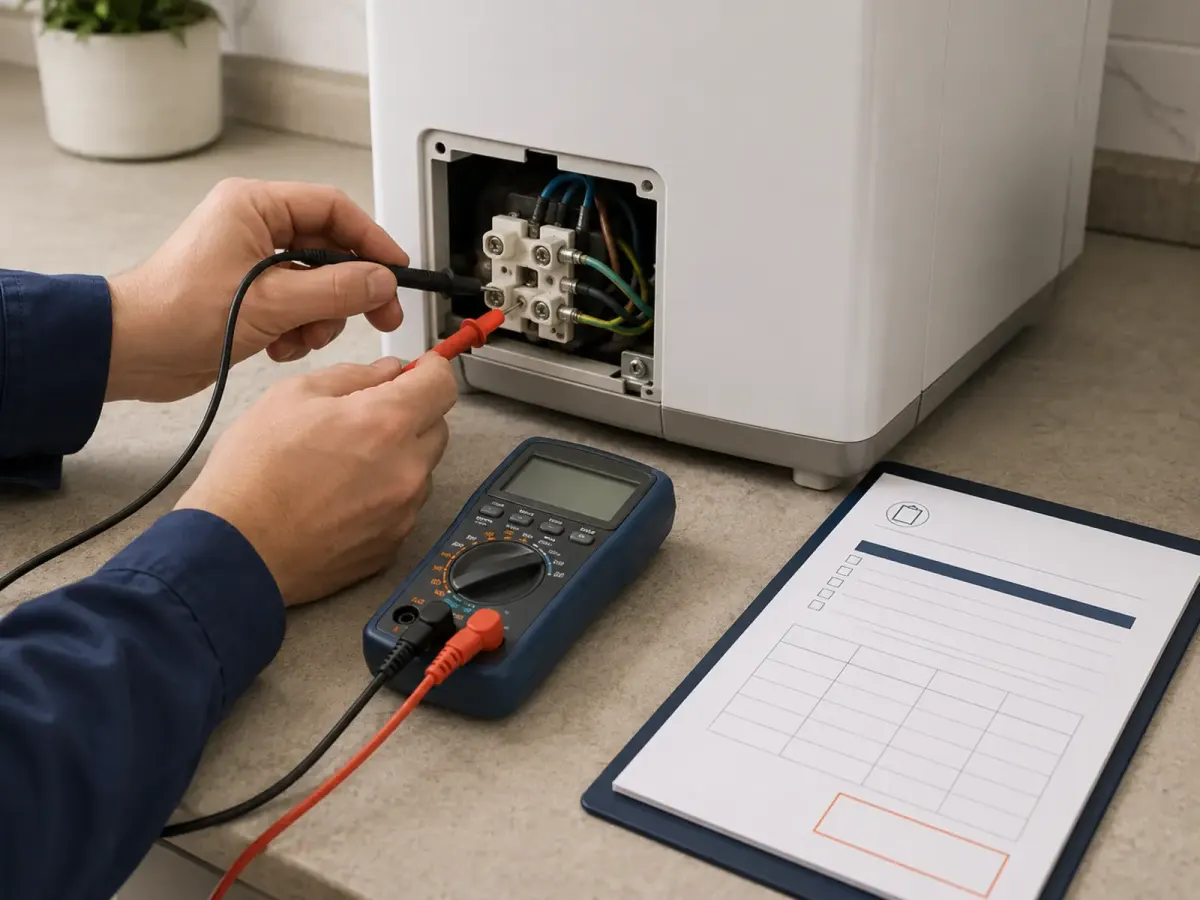
  3. Meter probes on an appliance terminal block beside a quote padStep — 03

    Diagnosis, then a written quote

    You see the number before any work begins, and nothing proceeds until you approve it.

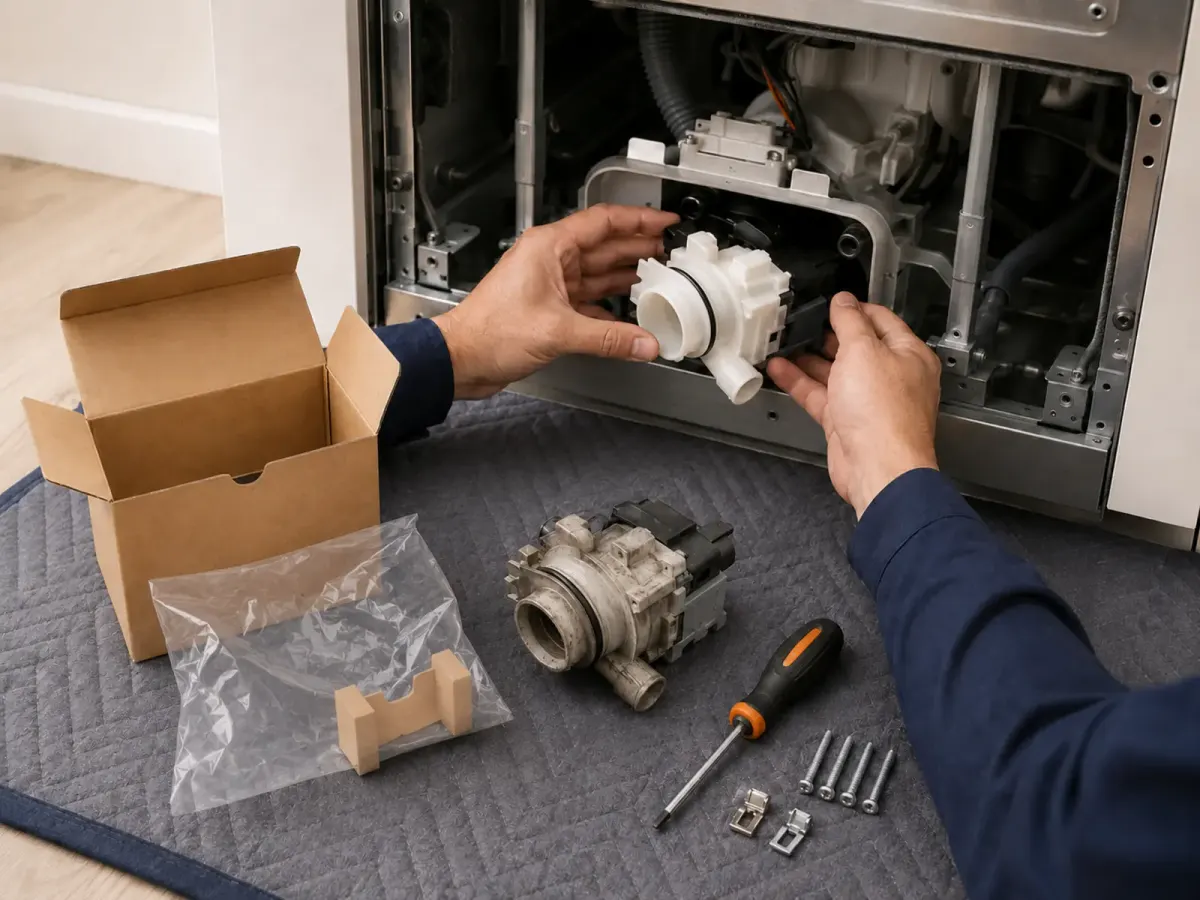
  4. Replacement pump being fitted, the worn part set asideStep — 04

    Repair and test cycle

    We run the appliance before leaving and log the job number that activates your 60-day parts & labour warranty.

— FAQ

Wine Cooler & Ice Maker Repair questions

Do you repair built-in wine columns?

Yes — Sub-Zero, Thermador and Miele wine storage built into cabinetry is regular work for us. These units need careful removal from millwork and factory-spec parts, and we book the extra time rather than rushing a unit fitted into expensive joinery.

My dual-zone cooler only holds temperature in one zone. Is that fixable?

Usually, and the diagnosis is genuinely useful: one zone drifting while the other holds points at a damper, fan or sensor rather than the cooling system itself. Those are all far cheaper repairs than a sealed-system fault.

Is a thermoelectric wine cooler worth repairing?

Often not. Small thermoelectric units are inexpensive to buy and their cooling modules are a significant share of that price. We tell you the number before you commit, and on those units it frequently favours replacement.

How often should the ice maker filter be changed?

Every six months in GTA water, sooner if you notice cubes getting smaller or cloudier. A tired filter restricts fill volume, which is why cube size is a better early warning than taste.

Wine Cooler & Ice Maker down? We can be there today.

— Related
Call NowBook Online
+1 (416) 885-0963