Fridge Making Noise: Which Sounds Are Normal?
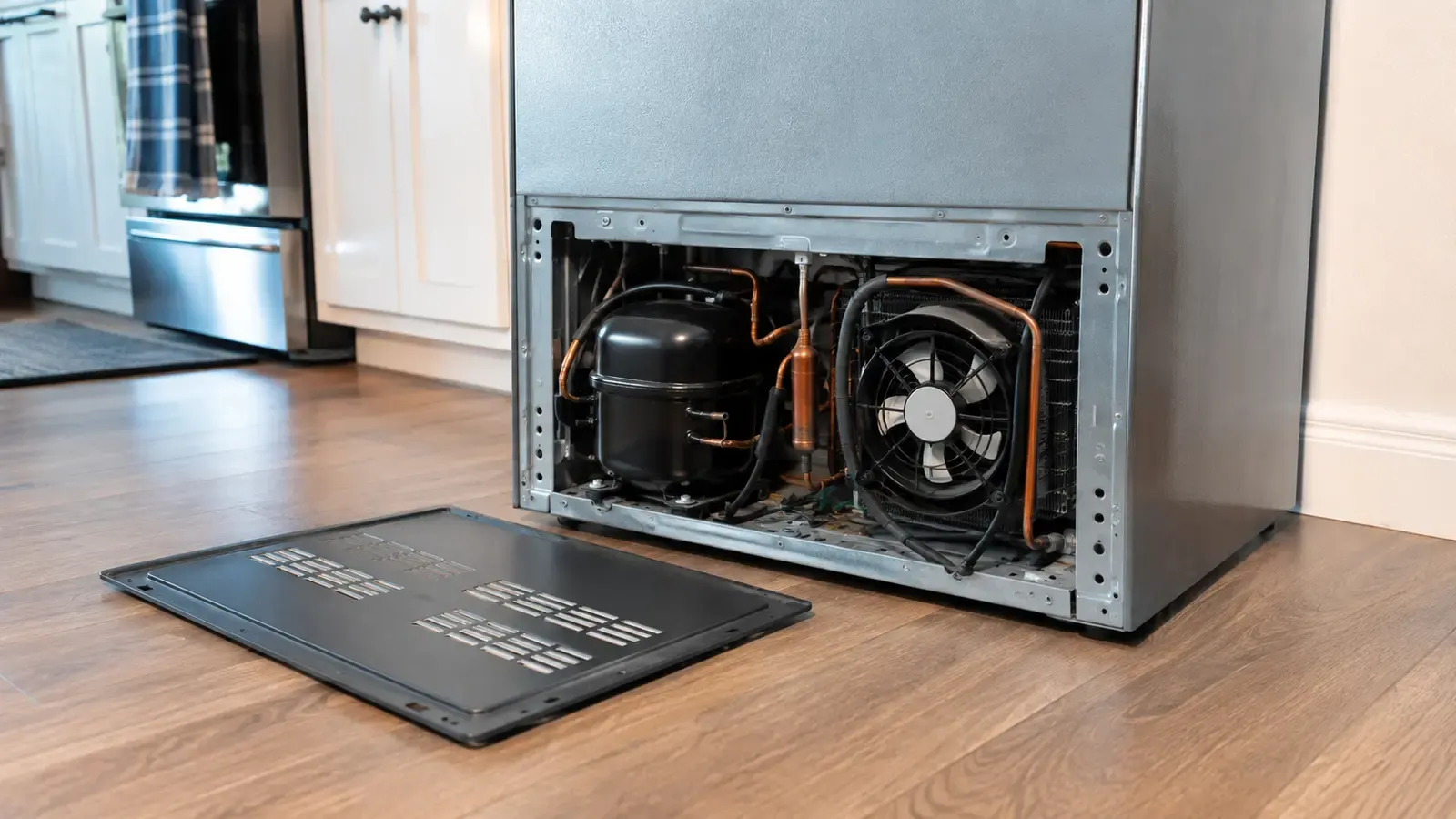
Refrigerators are the noisiest appliance in most kitchens, and almost everything they do is supposed to make a sound. The difficulty is that nobody tells you which sounds are the machine working and which are the machine complaining.
Here is the full list, sorted by whether it matters.
Completely normal
A low hum. The compressor running. It cycles on and off through the day, and you will hear it most in a quiet kitchen at night.
Gurgling and bubbling. Refrigerant moving through the lines, usually most obvious just after the compressor shuts off. One of the healthiest sounds a fridge makes.
A single click at the start or end of a cycle. Relays and valves switching. One click, then the hum starts or stops.
Water trickling. Meltwater running down the defrost drain into the pan near the compressor, where it evaporates. It happens after each defrost cycle.
A sizzle or hiss. Water dripping onto the warm defrost heater. Brief, and entirely normal.
Crackling or popping. Plastic components expanding and contracting as the interior temperature swings. Cheap fridges do this more than expensive ones.
A whoosh when the door closes. Air pressure equalising. It is a sign the seal is doing its job.
Ice dropping into the bin. Self-explanatory, and startling at 3am if you have forgotten the fridge makes ice.
Worth investigating
A hum that has become noticeably louder. Compressor mounts harden with age, transmitting more vibration into the cabinet. Not urgent, but it is the appliance ageing audibly.
Buzzing that comes and goes. Often the water inlet valve when the ice maker calls for water, particularly if the supply is partly restricted. Check the water line before assuming the worst.
Rattling. Usually something on top of the fridge, or the drip pan sitting loose beneath it. Genuinely worth checking those before calling anyone — it is a two-minute investigation.
Vibration through the floor. The unit is out of level, or too close to a wall or cabinet. Level it with a spirit level and the adjustable feet, and give it clearance.
A fan that runs constantly and never stops. On some models this is normal, on others it means the compartment is not reaching temperature. Check the actual temperature with a thermometer before worrying.
Stop and call
Three sounds mean something is failing, and delay makes each of them more expensive.
Clicking every few minutes with no cooling. The classic failing start relay. The compressor attempts to start, cannot, thermally overloads, cools down and tries again. Each attempt stresses the compressor. The relay is an inexpensive part; the compressor is not, and this is the pattern that kills them.
Grinding, scraping or a rhythmic knocking. Usually a fan blade striking ice or a fan motor bearing failing. Ignore it and the blade damages the shroud, or the ice buildup behind it grows into a defrost problem. Cheap now, expensive later.
A loud rattle or knock that rises with the compressor. Internal compressor wear. This one is serious — on a fridge over ten years old it typically ends the conversation about repair.
How to locate a noise
If you want to narrow it down before calling:
- Open the door with the fridge running. If the noise gets louder, it is inside — evaporator fan, ice maker or air damper. If it stays the same or gets quieter, it is at the back.
- Press the door switch by hand with the door open. The evaporator fan should run. Silence or grinding points straight there.
- Listen at the back, low down. The compressor and condenser fan live there. A fan you can hear changing pitch, or not hear at all, is informative.
- Note when it happens. Constant, only on cycle start, only after a defrost, only when making ice — each points somewhere different.
A technician diagnosing noise does exactly this, with the machine running. It is why we ask you to leave it plugged in rather than switching it off before we arrive: a fridge that is quiet because it is off tells us nothing.
The one that is not a noise problem at all
Occasionally a fridge that has become louder is simply working harder than it should. A condenser packed with dust makes the compressor run longer and more often, and people notice the increase in noise before they notice the temperature.
That is worth checking regardless, because it is the cheapest maintenance there is. Pull the grille, vacuum the coils, and see whether the machine settles down. We wrote up a Kingsway Sub-Zero where eight years of dust had done exactly this.
When to call
Call for the three sounds in the “stop and call” section, or for any noise accompanied by a temperature problem. Noise plus warmth is a different conversation from noise alone.
Fan motors, relays and levelling are inexpensive. Compressor noise on an older unit is where we run the numbers with you honestly, because that repair rarely makes sense past a decade.
Our refrigerator repair page has the other symptoms, and how long appliances last covers what to expect at your fridge’s age.
When to call a pro
If the checks above did not solve it, or the fault involves sealed refrigeration, mains wiring or a control board, that is our line. The service call is $120 plus HST, you approve a written quote before any work, and the repair carries a 60-day parts & labour warranty.
About the authors
Fast Appliance Repair Pro has been repairing residential appliances across Toronto and the GTA since 2013 — 4,530+ completed jobs. Everything in this guide comes from work orders, not from a content brief.
About our teamQuick answers
Is it normal for a fridge to gurgle?
Yes. Gurgling and light bubbling is refrigerant moving through the system, and it is most audible just after the compressor stops. It is one of the healthiest sounds a fridge makes.
Why is my fridge suddenly louder than it used to be?
Most often a fan blade catching ice, a fan motor bearing wearing, or the unit sitting slightly out of level so the cabinet resonates. All three are inexpensive to resolve.
Should I worry about a clicking fridge?
A single click as a cycle starts is normal. Clicking every few minutes with no cooling is a failing start relay — the compressor is trying and failing to start, and it should be looked at promptly.