Dryer Not Heating? The Checklist Before You Call
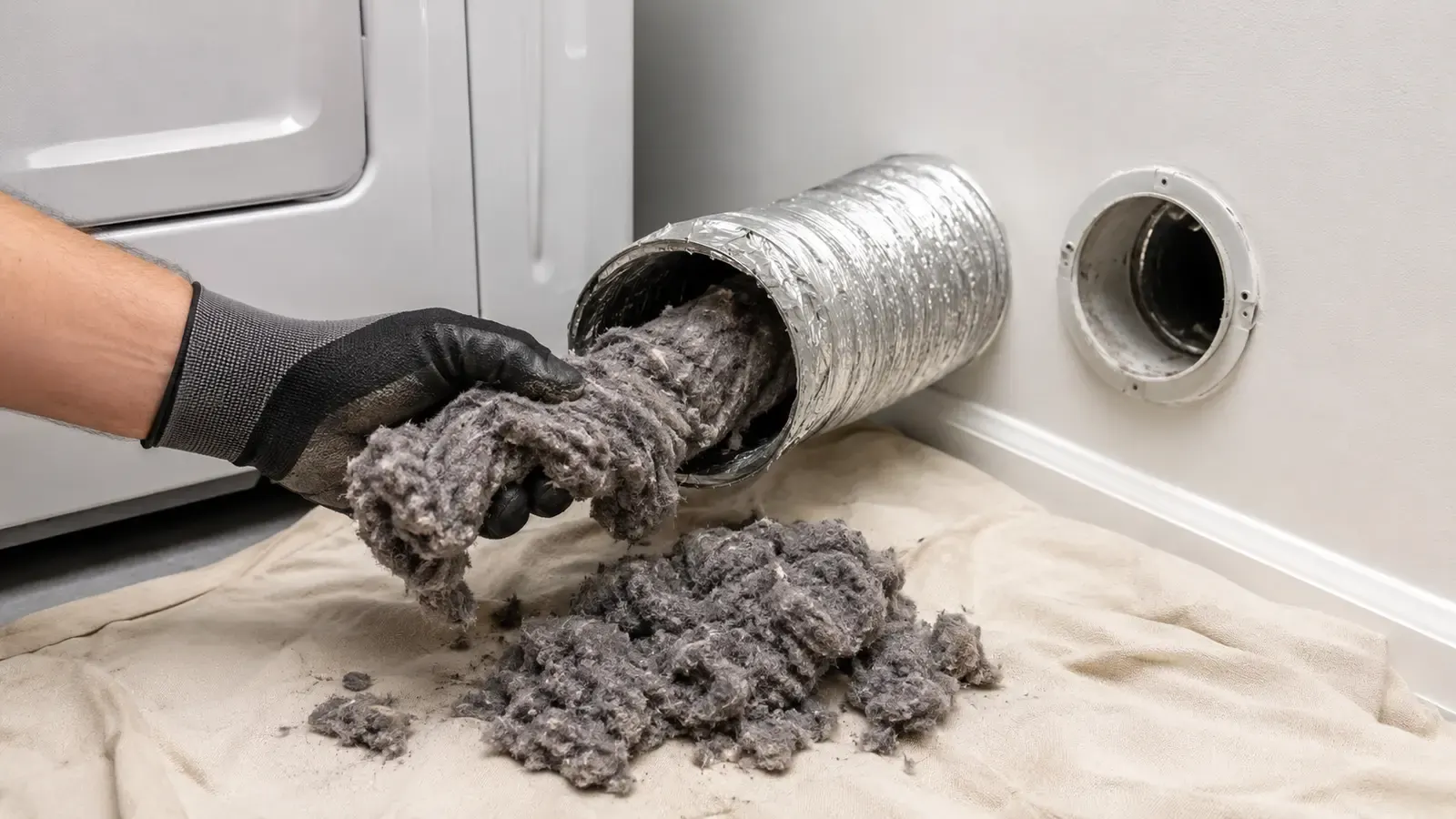
A dryer that tumbles happily and dries nothing is one of the more deceptive faults in the house. Everything looks fine: the drum turns, the display counts down, the machine sounds normal. The heat is simply not there.
Work through these in order. The first two cost nothing and resolve a surprising share of calls.
1. Check the breaker — both halves of it
Start here, because it is free and because it catches more people than anyone expects.
An electric dryer runs on a 240V supply made of two 120V legs. The motor runs off one, the heating element off the other. If one leg trips, you get exactly this symptom: a drum that turns, a light that works, and no heat whatsoever.
Go to the panel and switch the dryer breaker fully off, then back on. A double breaker can trip on one side while still looking engaged, and simply nudging it is not enough.
If that restores heat, note the date. A breaker tripping repeatedly is a separate problem worth an electrician.
2. Check the lint screen and the vent
Second, and this is the one that matters most.
Pull the lint screen and clean it. Then hold it under a running tap — if water pools on the mesh rather than passing straight through, it has an invisible film from fabric softener, and it is choking your airflow. Scrub it with a soft brush and warm soapy water.
Then check the vent itself:
- Look at the exterior vent flap while the dryer runs. It should be open with warm air coming out. If it is barely moving, the duct is blocked.
- Pull the dryer out and check the duct elbow behind it. Flexible foil crushes when a machine is pushed back and never recovers its shape.
- If drying times have crept up over months, the full duct run is packed — that accumulation is gradual and people adapt to it without noticing.
In a condo or townhouse, assume the duct is the problem until proven otherwise. Long runs through building shafts are where lint settles, and the machine at the end of them is almost never at fault.
3. Listen for what the machine is doing
- Tumbles, no heat at all — element, thermal fuse, thermostat or a lost supply leg
- Heats briefly then stops — cycling thermostat, or overheating from restricted airflow
- No tumble, no heat — motor, door switch, start switch or the whole supply
- Heats but clothes stay damp — almost certainly airflow, not heat
That last one is the important distinction. If the drum is warm to the touch at the end of a cycle but the clothes are damp, the machine is producing heat and failing to move moist air out. That is a duct problem every time.
4. Understand what the thermal fuse is telling you
If a technician has already replaced your thermal fuse and it has blown again, here is the part that often goes unsaid.
The fuse is a safety device, not a wear part. It blows when the machine overheats. The machine overheats because airflow is restricted. Replacing the fuse without clearing the duct means the underlying condition is untouched, and the new fuse will do exactly what the old one did.
We clear the vent as part of diagnosing any no-heat fault rather than billing it separately, for precisely this reason. There is a Scarborough job written up here where the fuse had been replaced eleven months earlier by someone who left the duct alone.
5. The safety part, stated plainly
Lint is combustible. A restricted duct holds hot air against a heating element. That combination is how dryer fires start, and it is why this is the one appliance fault we treat as genuinely urgent rather than merely inconvenient.
Stop using the dryer immediately if:
- There is a burning smell during or after a cycle
- The outside of the machine is hot to the touch
- The dryer trips its breaker repeatedly
- Clothes come out unusually hot with a scorched smell
Cut the power at the breaker and call. If there is smoke or any sign of fire, call 911 first — we can repair almost anything afterwards, and that part is not urgent.
What we check on a no-heat call
| Component | What we do |
|---|---|
| Supply voltage | Measured at the terminal block, both legs |
| Heating element | Continuity and resistance |
| Thermal fuse | Continuity — and the reason it blew |
| Cycling thermostat | Tested at temperature |
| High-limit thermostat | Continuity |
| Vent run | Airflow measured at the exterior vent |
| Blower wheel | Inspected for damage and lint |
Voltage first, because a half-tripped breaker imitates a dead element perfectly and costs nothing to rule out.
Heat pump dryers are different
If you have a heat pump dryer — increasingly common in newer condos — most of this does not apply. There is no vent, no conventional heating element, and cycle times are longer by design.
A heat pump dryer taking ninety minutes where a vented machine took sixty is working as intended. What genuinely degrades performance is the condenser filter, the secondary lint filter and the drain system, none of which most owners are told about at purchase.
When to call
Call us when the breaker and the vent are both ruled out, when the fuse has blown more than once, or at any sign of burning. Elements, thermostats and fuses are inexpensive parts with straightforward labour — dryers are among the better-value repairs there are.
Our dryer repair page covers the other symptoms in detail, and the maintenance schedule has the vent cleaning interval for your situation.
When to call a pro
If the checks above did not solve it, or the fault involves sealed refrigeration, mains wiring or a control board, that is our line. The service call is $120 plus HST, you approve a written quote before any work, and the repair carries a 60-day parts & labour warranty.
About the authors
Fast Appliance Repair Pro has been repairing residential appliances across Toronto and the GTA since 2013 — 4,530+ completed jobs. Everything in this guide comes from work orders, not from a content brief.
About our teamQuick answers
Why does my dryer keep blowing its thermal fuse?
Because airflow is restricted. The fuse blows when the machine overheats, and it overheats because hot moist air cannot escape. Replacing the fuse without clearing the duct guarantees a repeat.
Can a tripped breaker stop a dryer heating but not tumbling?
Yes, and it is a genuinely common cause. Electric dryers use both legs of a 240V supply: one runs the motor, the other the element. Lose one leg and the drum turns with no heat at all.
How often should a dryer vent be cleaned?
Once a year for most households, twice for heavy use or a long duct run — which describes most townhouses and high-rise apartments in the GTA.