Front-Load Washer Smells: Cause and Permanent Fix
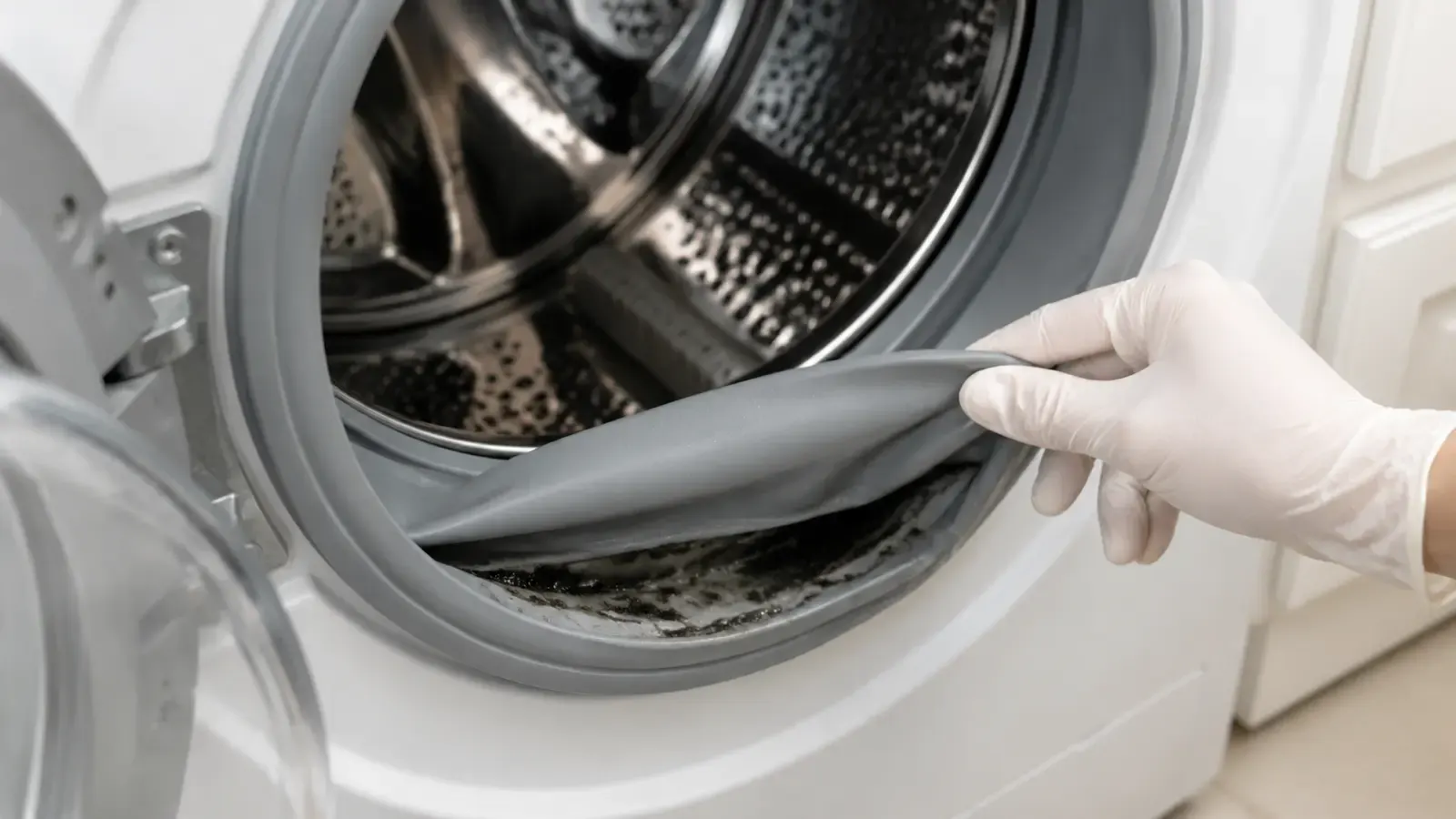
Front-load washers smell. Not all of them, not always, but often enough that it is one of the most common complaints we hear — and almost every owner assumes it is either their detergent or a defective machine.
It is neither. It is water that never leaves, and once you know where it sits the fix is straightforward and permanent.
Why it happens
A front-loader seals with a large flexible rubber boot around the door opening. That boot has a fold in it — a lip designed to keep water inside the drum during a wash.
That fold holds water. Every cycle, a small amount stays in it.
Combine that with three things and you have the problem:
- The door is kept shut between loads, so nothing dries
- Cold and eco cycles dominate modern washing, and they never get hot enough to clear the residue
- Detergent and softener residue accumulate in the same fold, feeding what grows there
The result is biofilm — a bacterial layer that produces the musty smell. It is in the boot fold, in the detergent drawer, and in the sump at the bottom of the machine, and detergent poured into the drum never reaches any of them.
Top-loaders rarely have this problem because they cannot hold water in a seal and their lids sit open more often.
The permanent fix
Four habits. Together they solve the majority of cases without a technician, and they keep it solved.
1. Leave the door ajar between loads. The single most effective change, and free. The boot dries, and biofilm cannot establish itself. If you have small children or pets and cannot leave it fully open, even a few centimetres helps.
2. Wipe under the boot lip weekly. Fold the rubber back and wipe around the whole circumference with a cloth. You will be surprised what comes out the first time. Ten seconds a week thereafter.
3. Run a hot maintenance wash monthly. Empty drum, hottest cycle available, either a proprietary washing machine cleaner or 250 ml of white vinegar in the drum. Heat is what clears residue that cold cycles leave behind.
4. Pull out and rinse the detergent drawer. Most lift out completely. Softener compartments in particular accumulate a sludge that smells on its own.
Give it a month of all four before concluding it has not worked. Established biofilm does not disappear after one hot cycle.
Also worth checking
Detergent dosage. Front-loaders use dramatically less than most people pour in, and excess detergent is food for exactly what you are trying to remove. Use the line on the cap, not the whole cap.
HE detergent. If you are using regular detergent in a high-efficiency machine, it produces more foam than the machine can rinse away, and the residue stays behind.
Fabric softener. It is the worst offender for residue. Many people find the smell resolves simply by stopping it, and using a wool dryer ball instead.
When it is not just habits
If you have done all of the above properly for a month and the smell persists, something is holding water that should have drained. That is worth looking at.
The usual suspects:
- Debris filter blocked — same one you would check for a drain fault. Behind a small door at the bottom front. Clean it.
- Sump holding standing water — the machine is not fully clearing at the end of the cycle
- Drain hose without a proper high-loop, letting waste water sit in the hose
- Boot seal torn — a tear traps water in the tear itself, and no amount of wiping reaches it
We attended a Humber Bay Shores job where all four habits were already in place and the sump was still holding water at the end of every cycle. That one needed the sump stripped and the drain hose routing corrected — and then it stayed fixed.
The regional wrinkle
If you live near the lake — Humber Bay Shores, Port Credit, the Beaches — this is worse for you than for someone inland, and it is not your imagination.
Ambient humidity is higher, condo laundry closets are small and often unventilated, and a machine in a closed cupboard dries far more slowly than one in an open basement. Leaving the closet door open as well as the washer door makes a measurable difference.
What we do on a call
We check whether the machine is genuinely holding water rather than assuming habits are at fault:
- Filter and sump inspected for standing water and debris
- Drain hose routing and high-loop verified
- Boot seal checked for tears and trapped debris
- A full cycle run and the drain timed against specification
If the answer is habits, we tell you that and charge you for the diagnosis rather than inventing a repair. If something is genuinely retaining water, that is a straightforward fix.
More on the other washer symptoms is on our washer repair page, and the maintenance schedule puts the monthly hot wash into a routine you might actually keep.
When to call a pro
If the checks above did not solve it, or the fault involves sealed refrigeration, mains wiring or a control board, that is our line. The service call is $120 plus HST, you approve a written quote before any work, and the repair carries a 60-day parts & labour warranty.
About the authors
Fast Appliance Repair Pro has been repairing residential appliances across Toronto and the GTA since 2013 — 4,530+ completed jobs. Everything in this guide comes from work orders, not from a content brief.
About our teamQuick answers
Will leaving the washer door open really stop the smell?
It is the single most effective thing you can do, and it costs nothing. The boot seal cannot dry with the door shut, and a boot that never dries is where the smell comes from.
Does bleach fix a smelly washing machine?
It kills what it reaches, which is not the biofilm inside the boot fold or the sump. A hot maintenance wash plus physically wiping under the boot lip works better and does not damage seals over time.
Is the smell a sign my washer is failing?
Usually not — it is a design and habit problem rather than a fault. It becomes a fault when water is not fully draining, and that is worth having looked at.