The call
A CityPlace condo, mid-July, and an ice maker that had gone quiet about three weeks earlier. The owner had already tried the obvious things: reset the ice maker, checked the water supply, emptied and refitted the bucket. The fridge itself was cooling perfectly — this was purely an ice problem, which is exactly the pattern we see on Samsung French-door units across the GTA.
She had also done what most people do first: searched the model number, found a video about melting the ice out with a hair dryer, and done it. It worked for about ten days. That detail mattered, because it told us the fault was not the ice maker module.
Diagnosis
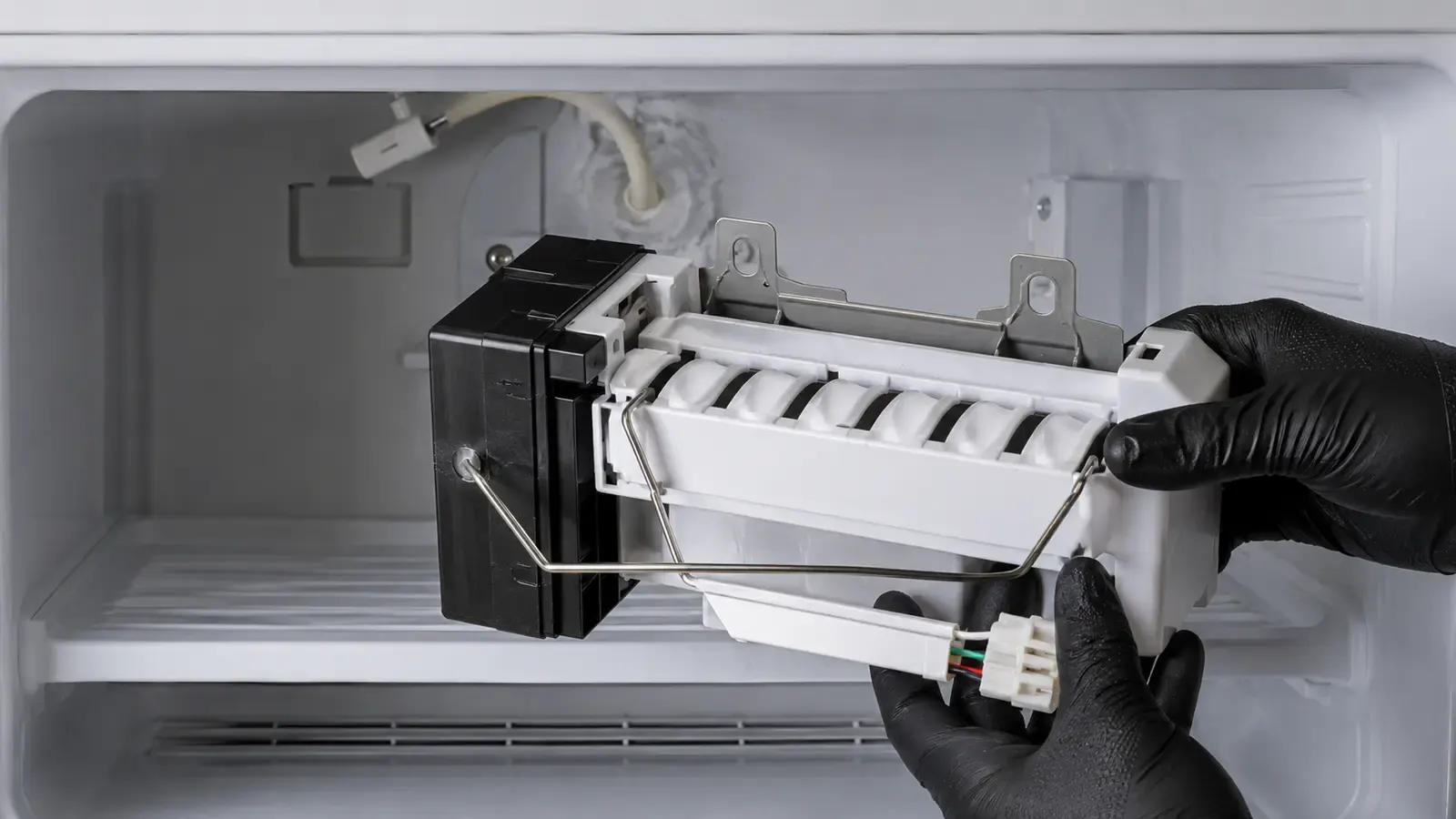
We pulled the ice maker assembly and found the ice room packed solid — a slab of ice around the auger and up into the fill tube, not loose cubes. That is the signature of humid air reaching a compartment that is supposed to stay sealed from the fresh food section.
Three things confirmed it:
- Frost had formed on the outside of the ice room housing, not just inside the bucket.
- The seal between the ice room and the cabinet had compressed unevenly and no longer sat flush.
- The defrost path in the ice compartment was blocked, so meltwater from each cycle refroze in place instead of clearing.
This is a known pattern on this generation of Samsung French-door refrigerators, and Samsung has issued service guidance covering it. Melting the ice out treats the symptom; if the seal and the defrost path are not addressed, it comes back within a few weeks. That is precisely what had happened here.
The fix
We thawed the compartment properly — controlled, with the assembly out, not with a hair dryer against a plastic housing that warps at surprisingly low temperatures. Then:
- Replaced the ice room seal with the OEM part.
- Cleared and tested the defrost drain path in the ice compartment.
- Replaced the fill tube heater, which had failed and was letting the tube ice over on every cycle.
- Reassembled, ran a full harvest cycle, and confirmed cube production and drop.
Ninety minutes on site, including the thaw. We left the unit producing ice and showed the owner what the first sign of a recurrence would look like — frost on the housing, not in the bucket.
Outcome
Ice production was back to normal within four hours, which is how long a full first fill takes on this model. We followed up a week later; still working.
I had already fixed it once myself and it came back. This time they actually explained why it froze in the first place, which nobody else had.
The important part for anyone with the same fridge: if your ice maker freezes over, thaws fine, then freezes again a few weeks later, the ice maker is not your problem. The seal is.
Cost breakdown
| Service call & diagnostic | $120 |
|---|---|
| Parts | $96 |
| Labour | $70 |
| Total (before HST) | $286 |